< Product / LEWES >
LEWES connects your assets and moves data from sensor to system.
LEWES is edge hardware that links assets, sensors and drone fleets into one system and moves their data securely from anywhere, including sites with no reliable signal.

< What LEWES does >
Getting data off the asset is the hard part.
Capture is largely solved. Most organisations can fly a drone or fit a sensor. The problem is what happens next. Data sits on cards, gets hand carried back to an office, and lands days later in a format nothing else reads, one asset and one operator at a time.
LEWES removes that step. It connects assets and sensors into one system, moves what they capture over whichever network is available, and lands it in a structure your analytics can use. Collection stops being a series of individual jobs and becomes something that runs.
Connect
Brings assets, sensors and autonomous fleets into a single system, without rebuilding the control architecture for each deployment.
Move
Moves sensor, telemetry and control data securely from anywhere, across 5G, LTE, SATCOM, RF, mesh or wired bearers.
Scale
Turns project-by-project drone work into a repeatable data network, and feeds structured data into MAYNE.
< Connect >
The operational command and control hub.
LEWES brings assets, sensors and autonomous fleets under one command and control hub, with one set of controls.
Each asset carries enough autonomy to act on local conditions without waiting for an instruction. It stays part of the wider system, which can task it, retask it and bring its data home. Autonomy without connection is a machine working alone. Connection without autonomy stops the moment the link does. LEWES gives you both.
The hardware sits on or near the asset, and you don't rebuild your control architecture for each new deployment.
< Move >
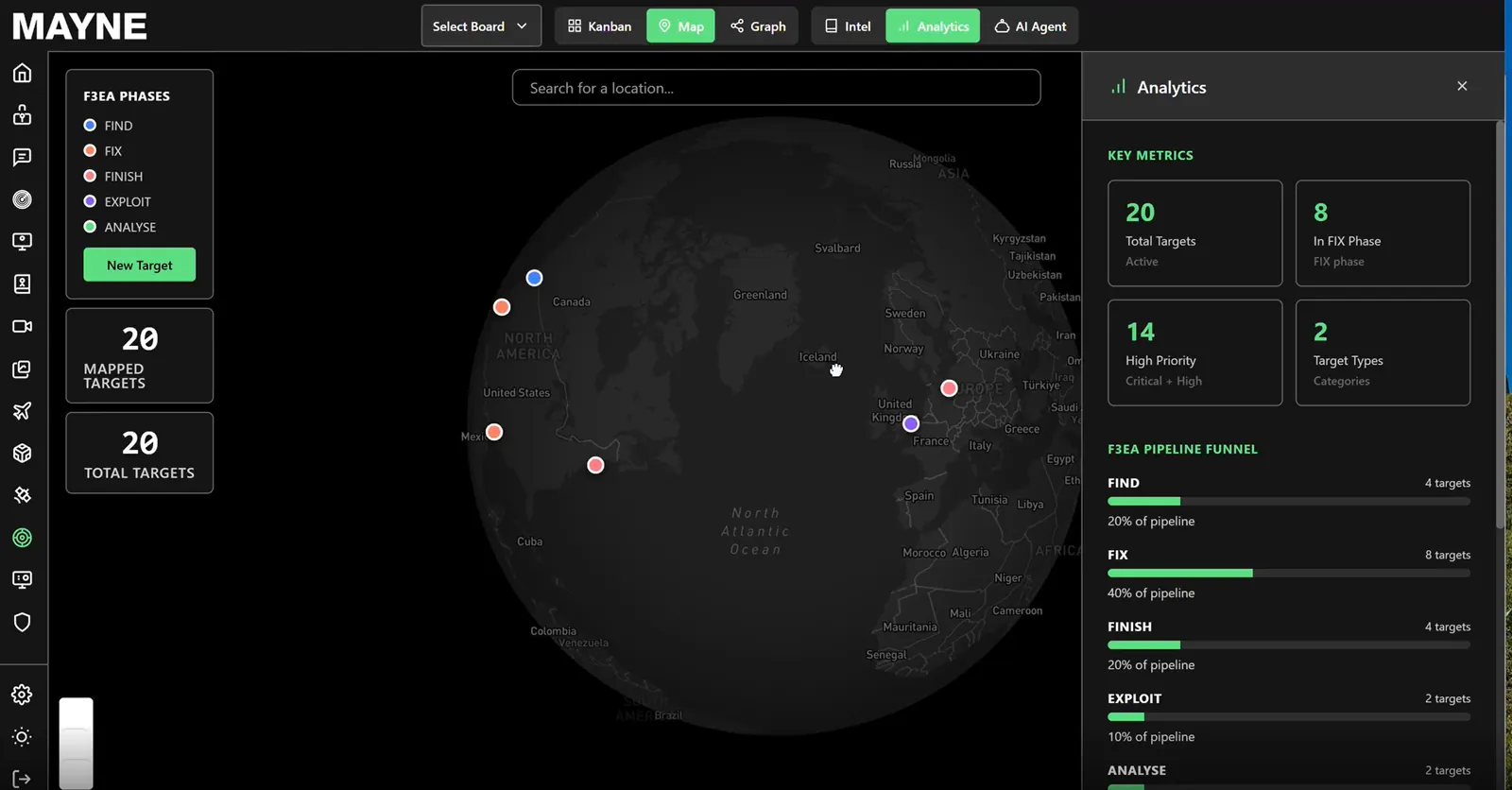
Moves data from the edge into the wider system.
Sensor feeds, telemetry and control data travel securely across whatever connection is available, without tying the operation to a single network or bearer. LEWES continuously manages the connection, switching between 5G, LTE, SATCOM, RF, mesh and wired networks to maintain the path between the asset and the system.
That means the operation is not built around the assumption of permanent, high-quality coverage. LEWES keeps the asset connected where it can, manages the data when it cannot, and gets it moving again when the link returns. The result is a more resilient way to operate across remote, degraded and contested environments.
Works when the connection does not.
Most systems assume a good link and degrade badly without one. The places worth watching are rarely the places with coverage.
< Connected >
Full link.
Data moves as it is captured. Operators watch the picture build rather than waiting for a delivery.
● Capture running
< Intermittent >
The link comes and goes.
Capture continues regardless. When a window opens, priority data goes first and the rest follows behind it.
● Capture running
< Denied >
No link at all.
Assets keep working to their last instruction and to local conditions, holding what they gather until there is somewhere to send it.
● Capture running
Encrypted end to end.
Data is encrypted on the asset before it leaves, stays encrypted in transit across whichever bearer carries it, and stays encrypted at rest when it lands. No intermediate hop reads it in the clear, including ours.
Keys stay under your control, and the encryption does not weaken on the degraded links where it matters most.
< Scale >
Command that scales with the operation, not the headcount.
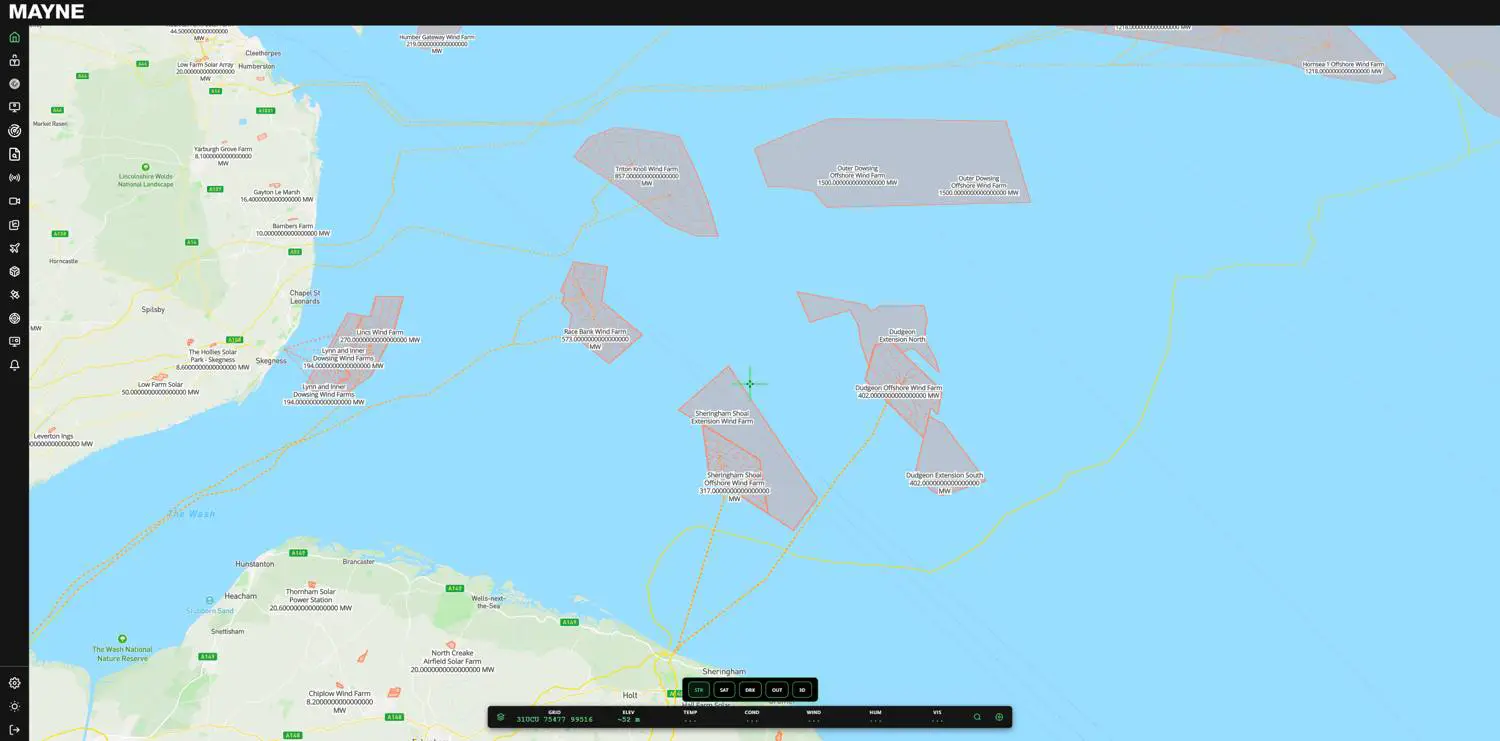
One drone, one operator, one dataset does not reach a national estate. LEWES runs fleets from centralised control, so adding assets adds coverage rather than staff. Operators supervise the operation instead of flying each part of it.
The commercial case runs along the same line. One team covers more ground per day, mobilisation costs fall, and inspections that used to need a crew on site stop needing one. It also takes people out of the places that carry the most risk, working at height, near live plant, or on the roadside, and sends the asset instead.
< Agnostic by design >
No lock-in, by design.
We develop and operate our own uncrewed aircraft. LEWES does not care whether you use them. Airframes and sensors are treated as modular parts you can swap, because over the life of an estate that is what they are.
Sensors improve. Airframes get replaced. Suppliers change, or stop trading. The system that connects them should not have to be rebuilt each time, and you should not stay with one manufacturer because your data only comes out one way.
Airframes
StirlingX uncrewed aircraft
Third-party rotary
Third-party fixed wing
Sensors
EO/IR
LiDAR
RF
Fixed and static
Bearers
5G
LTE
SATCOM
RF
Outputs
MAYNE
Open APIs
Standard export formats
< With MAYNE, or on its own >
Take both, or the one that fills the gap.
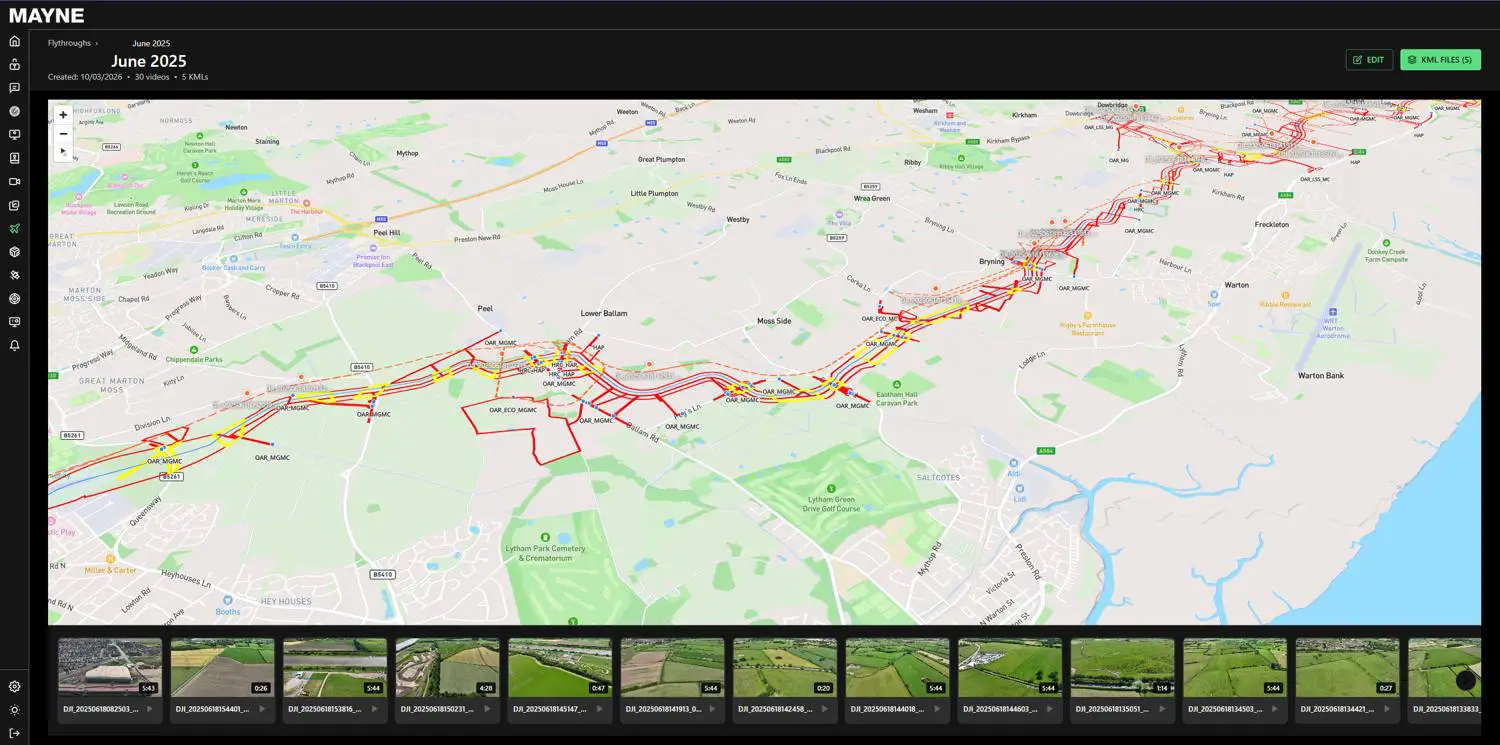
LEWES gets data off your assets and into wherever it needs to go. MAYNE turns it into decisions. Together they are the intelligence and autonomy layer between your assets and the decisions you make.
If you already have analytics or a data environment, LEWES works on its own and delivers into it. If you already have a way to move data, MAYNE works on its own.
Questions we get asked.
Need more information? Reach out to discuss your specific situation.

Is LEWES hardware or software?
Do we have to use your aircraft?
What happens on a site with no connectivity?
Can it feed our existing control room?
How much autonomy does an asset actually have?
Can it be deployed in a restricted environment?
Show us the site you cannot get data out of.
Pick the worst one. We will tell you what the link would look like, what would land at the other end, and how long it would take to stand up.