< Legal >
Carbon Reduction Plan

Commitment to Achieving Net Zero
StirlingX Ltd is committed to achieving Net Zero greenhouse gas (GHG) emissions by the end of 2035, well ahead of the UK Government’s 2050 target. This ambitious commitment, which has been communicated internally and externally, is a core part of our sustainability strategy and is underpinned by our Environmental Policy and ISO 14001-aligned Environmental Management System (EMS). Our executive leadership fully supports this goal, ensuring that resources and policies are in place to minimize environmental impact and continuously improve sustainability performance.
We are ISO 14001 compliant, meaning we have a certified EMS that drives continual improvement and legal compliance in environmental management. This system provides a structured framework for setting objectives, monitoring progress, and engaging employees in environmental stewardship. In line with these commitments, StirlingX’s Environmental Policy explicitly states our aim for operations to be carbon Net Zero by 2035 and outlines measures to achieve this, such as reducing fossil fuel use, increasing renewables, and offsetting any unavoidable emissions.
Summary of Commitment: StirlingX will meet or exceed all relevant environmental legislation and voluntarily accelerate decarbonisation of our operations. We have designated a Compliance Manager (Rowley Cory-Wright) to oversee carbon management efforts, and our Board and Chief Officers are engaged in directing and reviewing our progress toward Net Zero. This strong governance and commitment lay the foundation for the Carbon Reduction Plan detailed below.
Baseline Emissions Footprint
Our Baseline Emissions Footprint represents our GHG emissions prior to implementing significant carbon reduction initiatives. We have completed a comprehensive GHG inventory for our baseline year 2025 (the first year we actively measured our carbon footprint), using the Greenhouse Gas Protocol Corporate Accounting Standard for accuracy. This baseline encompasses Scope 1 (direct emissions), Scope 2 (indirect energy emissions), and a subset of Scope 3 (other indirect emissions) as required by Procurement Policy Note 06/21. The included Scope 3 categories are: Business Travel, Employee Commuting, Waste Generated in Operations, Upstream Transportation and Distribution, and Downstream Transportation and Distribution, in line with government guidance.
Baseline Year: 2025
Baseline Emissions (tCO2e):
Scope 1 (Direct)
1.25 Emissions (tCO2e)
Scope 2 (Energy Indirect)
12.86 Emissions (tCO2e)
Scope 3 (Included Indirect) **
1.96 Emissions (tCO2e)
Total (Scope 1+2+3)
16.07 Emissions (tCO2e)
Included Scope 3 sources: business travel, employee commuting, waste disposal, upstream and downstream goods transport.
Additional Details: Our baseline covers all relevant emission sources within our operational control for 2025, using actual activity data (fuel use, electricity use, travel mileage, etc.) and the UK Government’s conversion factors to calculate tCO2e. Data was gathered and verified through our Carbon Management Procedure – for example, utility bills and fuel records were used to quantify Scope 1 and 2, and travel logs and supplier data for Scope 3. Establishing the 2025 baseline has given us a clear reference point against which to measure future reductions. (Notably, as a company that provides drone-based services, our business model inherently avoids emissions that would occur if using fossil-fuel-powered aircraft or vehicles for the same tasks. However, the baseline figures above reflect only StirlingX’s own operational emissions.)
Current Emissions Reporting
Current Year: 2026 (Reporting Year)
For the year 2026, StirlingX is on track to significantly reduce emissions relative to the 2025 baseline. Our planned emissions for 2025 are summarized below (these figures will be finalized after full year-end data analysis, but preliminary values are provided as placeholders):
First reporting Year: 2026
2026 Emissions (tCO2e):
Scope 1 (Direct)
0.0 Emissions (tCO2e)
Scope 2 (Energy Indirect)
12.86 Emissions (tCO2e)
Scope 3 (Included Indirect) **
1.75 Emissions (tCO2e)
Total (Scope 1+2+3)
14.61 Emissions (tCO2e)
These 2026 figures reflect the estimated initial impact of our carbon reduction measures implemented since the baseline year. We anticipate a notable decrease in total emissions (Scope 1+2+3) compared to 2025, moving us closer to our Net Zero goal. For instance, we expect Scope 2 emissions to drop due to our switch to renewable electricity, and Scope 1 to shrink as our vehicle fleet is now fully electric (eliminating most direct fuel use). Any remaining emissions in 2026 that we cannot eliminate through reductions will be neutralized via accredited carbon offset projects by the end of 2035, ensuring we achieve net zero in practice.
Additional context: We are establishing 2026 as our first reporting year with measured improvements. Our carbon accounting approach adheres to best practices – emissions are calculated in CO2 equivalent using UK Government emission factors, and reporting aligns with Streamlined Energy & Carbon Reporting (SECR) standards for Scopes 1 and 2, with required Scope 3 categories reported as per PPN 06/21 guidance. Going forward, we will update our carbon footprint annually and publish our Carbon Reduction Plan on our website to maintain transparency and track progress.
Emissions Reduction Targets
StirlingX has set rigorous carbon reduction targets to ensure we achieve and sustain net zero emissions:
- Net Zero by 2035: We aim to reduce our net GHG emissions to zero by the end of 2035 (100% reduction from the 2025 baseline). This will be accomplished through direct reductions and verified offsets for any residual emissions. This target exceeds the UK’s requirement of net zero by 2050 and demonstrates our leadership in climate action.
- Interim Targets: Given the proximity of our net zero target, our focus is on rapid decarbonisation between 2026 and 2035. By mid-2025, we targeted establishing our emission baseline and implementing major initiatives; by the end of 2026 we target a 100% reduction in gross Scope 1 emissions (e.g., by eliminating fossil fuel use in company vehicles and facilities) and a significant reduction in Scope 3 emissions. We project total emissions will decrease to approximately 14.61 tCO2 by end 2026, from 16.07 tCO2 in 2025 (exact figures to be updated), through the measures outlined in this plan. In percentage terms, we anticipate a reduction on the order of xx% over this one year period.
- Long-Term Sustainability: Beyond 2035, our goal is to maintain net zero emissions on an ongoing basis and accommodate future growth sustainably. This means that for 2026 and beyond, we will continue to implement carbon reduction projects to keep our operational emissions as low as possible, and we will offset any residual emissions annually to remain at net zero. We are committed to not only achieving net zero early, but also to staying carbon neutral thereafter, in line with science-based targets. We will also continuously review our targets and align them with the latest climate science and any new industry standards. For example, if our business expands, we will set new reduction targets to ensure emissions do not rise again.
Our emissions reduction targets are supported by formal company policies. The Carbon Management Policy mandates setting short- and long-term carbon targets that are Specific, Measurable, Achievable, Relevant, and Time-bound (SMART). Senior management has approved these targets and is committed to providing the necessary support to achieve them. Progress against targets will be tracked via key performance indicators (e.g. total GHG emissions, carbon intensity per project) and reviewed regularly as part of our management reviews.
Carbon Reduction Projects & Initiatives
To reach Net Zero by 2035, StirlingX has already initiated, or is planning, a number of carbon reduction projects across our operations. These initiatives are informed by our internal policies – including the SX Environmental Policy, SX Carbon Management Policy/Procedure, SX Energy Management Policy/System, and various action plans – which together provide a comprehensive roadmap for reducing our carbon footprint. Every measure is aimed at cutting emissions or enhancing sustainability in a practical, measurable way.
Completed Carbon Reduction Initiatives (since 2025 baseline):
- 100% Renewable Electricity: We have transitioned to using electricity from renewable sources for our offices and operations wherever possible. We are working closely with our office landlord to increase the share of renewable energy in our power supply, moving toward 100% green electricity. For field operations, we even utilize a small off-grid solar power system to charge equipment and drone batteries on-site. This reduces our Scope 2 emissions significantly by cutting associated CO2 from grid electricity.
- Electrification of Fleet and Equipment: StirlingX now operates a fleet of Battery Electric Vehicles (BEVs) for all company transport needs, eliminating tailpipe emissions (Scope 1) from business travel by company cars. We have phased out older petrol/diesel vehicles in favor of electric models charged on renewable energy. Additionally, we ensure our drone operations use battery-powered equipment and we responsibly recycle end-of-life lithium batteries through a proper scheme. These steps not only cut direct emissions but also demonstrate our commitment to low-carbon technology.
- Travel Emissions Minimization: We have implemented an environmentally conscious travel policy to reduce carbon from business travel (Scope 3). This includes favouring virtual meetings and video conferencing to avoid travel, encouraging public transport or car-sharing for necessary travel, and using electric vehicles or trains rather than fossil-fueled cars or domestic flights. Long-haul air travel is avoided entirely or only approved if no alternative exists, and even domestic flights are used only as a last resort. As a result, our business travel emissions have dropped and our team is accustomed to low-carbon travel practices.
- Energy Efficiency Upgrades: Guided by our Energy Management Policy & Action Plan, we have started upgrading our facilities and equipment to be more energy-efficient. Key actions completed include replacing all office lighting with LED bulbs, installing motion sensors and timers to eliminate unnecessary lighting, and optimizing our heating, ventilation, and air conditioning (HVAC) systems. Regular maintenance and tuning of HVAC, and use of programmable thermostats, have been introduced to reduce energy waste. We have also enabled power-saving settings on computers and office electronics and prioritized Energy Star-rated equipment procurement. These measures cut electricity consumption (Scope 2) and improve overall energy performance, supporting our goal of a 10% reduction in energy use over 2 years as set out in our Energy Action Plan.
- Waste Reduction & Recycling: We have strengthened our waste management practices to reduce emissions associated with waste (part of Scope 3). Internally, we promote a “reduce, reuse, recycle” culture: minimizing paper use through digital workflows, segregating recyclables, and ensuring responsible disposal of electronic waste and batteries. For example, we only produce hard copies of documents when legally required and otherwise use online collaboration tools, significantly cutting paper consumption. We also engage certified recycling services for office waste and obsolete equipment. While waste-related emissions are a smaller portion of our footprint, these efforts support our overall environmental goals (as documented in our Environmental Policy’s Waste & Recycling section).
- Procurement and Supply Chain Measures: StirlingX prefers local and low-carbon suppliers for goods and services. We source equipment from UK suppliers where possible to shorten supply chains and reduce transportation emissions. We also apply a Green Procurement approach (outlined in our Carbon Management Policy) to favor products with lower carbon footprints and encourage our suppliers to have sustainability credentials. By doing so, we indirectly reduce Scope 3 emissions from upstream transportation and production. Additionally, we have completely banned the use of hydrofluorocarbons (HFCs) on-site (commonly found in older refrigeration/HVAC equipment) to prevent high-GWP gas leaks.
- Employee Engagement and Training: We believe that an informed workforce is key to achieving our carbon goals. All StirlingX employees receive environmental sustainability training. Starting with induction, employees learn about our Environmental Policy and their responsibilities in supporting it. We conduct regular training sessions and awareness campaigns on topics such as energy saving practices, proper waste disposal, and eco-friendly travel options. We have established “green champions” internally and encourage staff suggestions for further carbon savings. This engagement has fostered a culture where everyone is conscious of their environmental impact and contributes to reductions (for instance, employees proactively carpool or cycle to work where feasible). The impact is qualitative but significant – it ensures our policies are effectively implemented in day-to-day operations.
- Carbon Accounting & Management: Alongside practical projects, we have put robust carbon management processes in place. A dedicated Carbon Manager (part of our compliance team) oversees data collection and analysis of emissions. We carried out a thorough carbon audit to establish our 2025 baseline, identifying all sources of Scope 1, 2, and key Scope 3 emissions. We have implemented an internal monitoring system to track energy use and emissions on an ongoing basis (leveraging elements of our Energy Management System for data monitoring and analysis). Regular internal audits and senior management reviews are now conducted to evaluate progress and ensure accountability for meeting targets. This procedural backbone, detailed in our Carbon Management Procedure, ensures that carbon reduction remains a continuous, systematic effort.
Collectively, these completed initiatives have already started to drive down StirlingX’s emissions in 2026, and they establish a strong foundation for achieving Net Zero. For example, switching to renewables and electrifying transport directly cut a large portion of our CO2 output, while efficiency and travel policies chip away at the rest. Moreover, these actions yield co-benefits such as reduced operating costs (from energy savings) and enhanced operational efficiency.
Planned Future Initiatives:
To sustain our Net zero status beyond 2035 and continue improving, StirlingX has planned additional measures, drawing on opportunities identified in our carbon strategy reviews:
- On-Site Renewable Energy Generation: We intend to expand the use of renewable energy by installing on-site solar panels at our facilities (where feasible) to generate clean electricity. A feasibility study is scheduled for 2027 to assess solar PV installation on our office roof and at key project sites. Any on-site generation will further reduce our Scope 2 emissions and provide resilience against energy price fluctuations. We are also exploring the purchase of certified Renewable Energy Guarantees of Origin (REGO) electricity to ensure all grid power we use is verifiably green.
- Enhanced Energy Efficiency Projects: Building on our Energy Action Plan, we plan continual upgrades to reduce energy consumption. In the next 1-2 years, we will: improve insulation and weather-proofing at our premises to cut heating/cooling demand, upgrade remaining equipment (such as servers or appliances) to ultra-efficient models, and possibly install smart energy management systems to optimize energy use in real-time. We have budgeted for further HVAC modernization and are considering heat pump technology to replace any legacy heating systems. These projects aim to exceed the initial 10% energy reduction goal and push toward deeper cuts in energy use across all operations.
- Fleet and Transport Innovations: While our company car fleet is already electric, we aim to broaden low-carbon transport in other areas. For site visits and fieldwork, we will pilot the use of electric vans (for transporting drone equipment) and even electric drones/VTOL craft as they become viable, to ensure our service delivery stays low-carbon. We will also continue to encourage sustainable commuting for employees by expanding incentives for cycling, walking, and using public transport (e.g., participating in a Cycle-to-Work scheme, providing electric vehicle charging at the office for staff vehicles). Our travel policies will be regularly updated to include emerging options like electric car hire and to tighten restrictions on carbon-intensive travel modes.
- Supply Chain & Offsetting Initiatives: We recognize that once our own operations are net zero, the next challenge is tackling supply chain emissions. Thus, we plan to engage our key suppliers on carbon reduction – for instance, by favouring suppliers who have science-based targets or their own carbon neutrality, and by collaborating with them to reduce packaging and logistics emissions. Additionally, to address any unavoidable emissions, StirlingX will invest in accredited carbon offset projects from 2035 onward. Our offset strategy will prioritize projects with verified benefits, such as reforestation, peatland restoration, or renewable energy projects that remove or prevent CO2 emissions and in some cases support biodiversity (aligning with our Biodiversity Action Plan commitments). By 2026, we aim to offset not just our direct emissions but also consider offering carbon-neutral services to our clients by offsetting emissions associated with our projects. Offsetting is a last step – our primary focus remains on actual reductions – but it is an important component to ensure we neutralize residual emissions and maintain net zero year after year.
- Continuous Improvement and Innovation: Post 2035, StirlingX will not rest on its achievements. We will continuously review our Carbon Management Plan at least annually (as required by our policy). In these reviews, we will look for new technologies and innovative practices to further reduce our footprint. For example, we will monitor developments in sustainable aviation fuel or hydrogen fuel cells for drones, which could eventually make even our drone battery charging footprint negligible if such options become practical. We will also keep improving our data analytics for emissions (possibly implementing advanced software to track real-time carbon metrics). Importantly, we will expand our employee and stakeholder engagement – launching campaigns to maintain awareness, and perhaps introducing internal carbon budgets or rewards for team-level reductions. By fostering a culture of continuous improvement, we ensure that StirlingX stays at the cutting edge of carbon reduction in our industry.
- Alignment with Broader Environmental Goals: Finally, our carbon reduction efforts will remain aligned with our broader environmental and social responsibility goals. We will continue to integrate carbon management with initiatives in our Ecological and Biodiversity Action Plans. For instance, we might undertake tree planting or habitat restoration projects on StirlingX sites or in local communities, which serve to sequester carbon while enhancing biodiversity. This holistic approach means our Carbon Reduction Plan contributes not only to climate change mitigation but also to protecting ecosystems – delivering a wider sustainability impact consistent with our corporate values.
By implementing the projects above, StirlingX is confident of not only meeting our Net zero 2035 goalbut also of creating a robust low-carbon operation that can handle future growth without increasing emissions. Each initiative is tracked under our EMS, with responsible owners and timelines (per our action plans), to ensure accountability and successful execution. Progress is reported quarterly to senior management as part of our performance review cycle.
Declaration and Sign-Off
This Carbon Reduction Plan has been completed in accordance with PPN 06/21 – Taking Account of Carbon Reduction Plans in the procurement of major government contracts, and its associated guidance and reporting standards. It represents an accurate and truthful account of StirlingX Ltd’s current carbon footprint and our commitments to reducing emissions to achieve Net Zero. All information in this plan has been reviewed and approved by StirlingX’s senior management.
- Emissions Methodology: Our emissions data (Scopes 1, 2, and 3) have been calculated and reported following the Greenhouse Gas Protocol Corporate Standard. We have used the UK Government’s latest conversion factors for greenhouse gas reporting to convert activity data (e.g., kWh, litres of fuel, km traveled) into tonnes of CO2 equivalent. We have included all Scope 1 and 2 emissions, and the required subset of Scope 3 emissions categories, in line with the PPN 06/21 technical standard. Scope 1 and 2 figures are also prepared in alignment with Streamlined Energy & Carbon Reporting (SECR) requirements for transparency and consistency. Our emissions inventory and reduction initiatives will be reviewed annually and updated as needed, with the Carbon Reduction Plan itself refreshed within 6 months of our financial year-end to reflect the latest data and progress.
- Carbon Reduction Measures: StirlingX confirms that the carbon reduction measures outlined in this plan are operational or will be implemented as stated. The emissions reductions projected from these measures (and any offsets employed) will collectively achieve our commitment of Net Zero by 2035. We will continue to monitor the effectiveness of these measures and report on performance openly. This Plan will be made public on our company website for transparency and will be kept up to date to chart our journey toward sustained net zero emissions.
This Carbon Reduction Plan has been approved by our executive leadership. It is signed on behalf of StirlingX Ltd by the appropriate officer:
Signed on behalf of the Supplier (StirlingX Ltd):
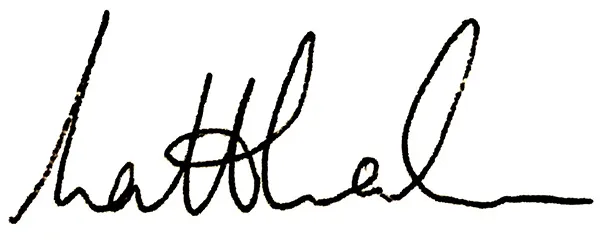
Matt Rake
Chief Regulatory Officer, StirlingX Ltd
Date: 13/02/2026

Ready to move forward?
Get in touch with our team to discuss your specific needs today.